Water Quality & Best Practices
Commercial Cold Plunges and Ice Baths: Safety, Design and Water Quality Guide
Cold plunges and ice baths are becoming increasingly popular in gyms, wellness centers, fitness studios, spas, and athletic facilities. As interest in cold-water immersion grows, more commercial businesses are considering adding dedicated cold plunge systems to their facilities.
However, operating a commercial cold plunge involves more than installing a tub and filling it with cold water. Proper water treatment, filtration, circulation, facility design, and safety procedures are essential for protecting users and maintaining consistent water quality.
Unlike traditional swimming pools and hot tubs, cold-water venues present unique operational challenges. Lower temperatures can affect disinfectant performance, water testing, and equipment operation.
To address these challenges, the Council for the Model Aquatic Health Code (CMAHC) released dedicated guidance for commercial cold plunges and ice baths.
In this guide, we explain the important recommendations for designing, operating, and maintaining commercial cold-water facilities.
1. What Are Commercial Cold Plunges and Ice Baths?
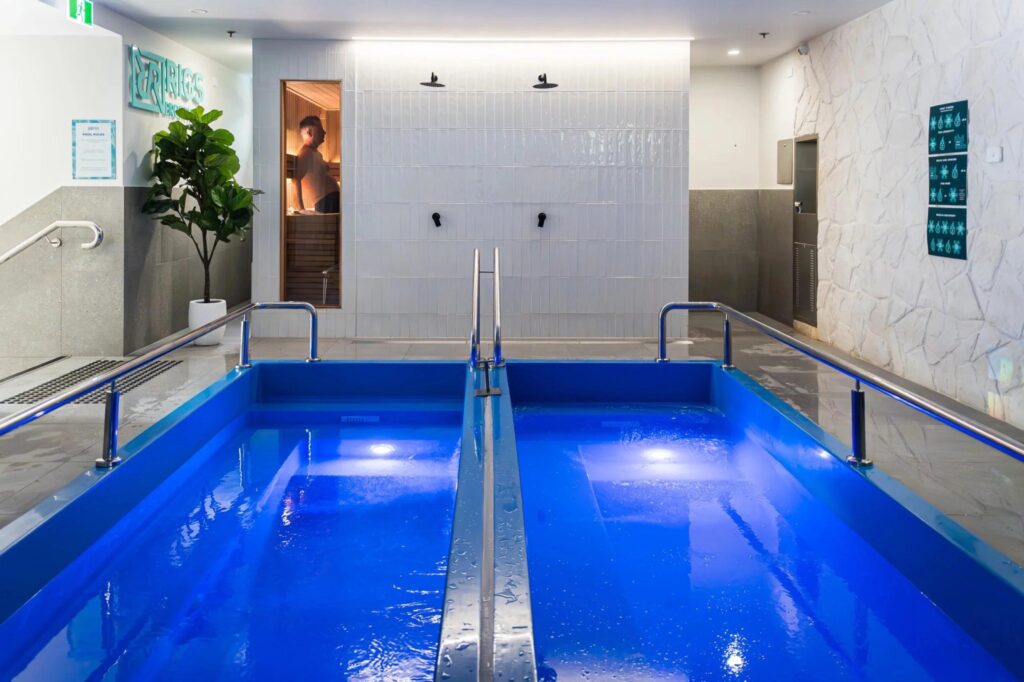
A cold plunge is a specialized pool, tub, or tank maintained at a low water temperature for short-term immersion.
These facilities are commonly found in:
- Fitness centers and gyms.
- Wellness and recovery studios.
- Hotels and luxury resorts.
- Athletic training facilities.
- Spas and wellness clinics.
- Sports rehabilitation centers.
Cold-water venues can include small, manufactured single-user tubs as well as larger permanent installations with recirculation and filtration systems.
They are frequently used as part of contrast therapy, where users alternate between warm environments, such as saunas, and cold-water immersion.
As commercial demand increases, facility operators must understand the differences between cold-water systems and conventional swimming pools.
2. Why Do Cold Plunges Require Special Safety Guidelines?
Cold-water systems operate under conditions that can create additional challenges for both users and facility operators.
The CMAHC guidance identifies several important concerns, including:
- Water quality and disinfection.
- Cold shock response.
- Equipment performance.
- Water circulation and filtration.
- Safe entry and exit.
- Supervision and emergency procedures.
- Special requirements for smaller systems.
One important difference is that chemical disinfection reactions can occur more slowly at lower water temperatures.
This can make it more difficult to maintain effective sanitation using treatment systems designed for traditional swimming pools.
Commercial operators therefore need to evaluate their equipment and treatment procedures specifically for cold-water applications.
3. Understanding Water Temperature and Cold Shock Risks
Cold-water immersion can trigger an immediate physical response known as cold shock.
This response occurs when the body experiences sudden exposure to cold water.
Potential symptoms include:
- Sudden changes in breathing.
- Increased heart rate.
- Elevated blood pressure.
- Loss of coordination.
- Difficulty controlling breathing.
These reactions can create serious safety risks, including drowning, particularly when a person involuntarily gasps while submerged.
Cold shock may occur when people enter water below approximately 70°F (21°C), according to the CMAHC guidance.
Why Temperature Monitoring Matters
Commercial cold plunge facilities should provide clear temperature information so users understand the conditions before entering the water.
Recommended measures include:
- Installing a visible water thermometer.
- Maintaining controlled operating temperatures.
- Monitoring temperature consistently.
- Providing clear user instructions.
- Displaying appropriate safety signage.
Operators should also establish procedures for responding to unexpected temperature changes.
4. Water Quality and Disinfection in Cold Plunge Systems
Water sanitation is one of the most important aspects of commercial cold plunge management.
Even though cold water may slow certain biological processes, it does not eliminate harmful microorganisms.
Shared cold-water systems can introduce contaminants through direct human contact, making proper disinfection and water management essential.
Why Disinfection Is More Challenging
At lower temperatures, chemical reactions generally occur more slowly.
As a result, disinfectants may take longer to inactivate certain microorganisms compared with warmer swimming pool or spa water.
Cold plunge operators should avoid assuming that standard pool treatment procedures will automatically provide adequate sanitation.
Important CMAHC Guidance Recommendations
The CMAHC cold-water guidance recommends:
- Maintaining free chlorine at or above 3.0 ppm.
- Maintaining bromine at or above 4.0 ppm.
- Following manufacturer instructions and applicable maximum concentrations.
- Using automated chemical controllers for continuous dosing.
- Including interlock protection to prevent chemical feeding when circulation flow is insufficient.
- Avoiding cyanuric acid in cold-water systems.
These are recommendations in the guidance document, not universal legal requirements. Operators should verify applicable local regulations, approval conditions, and equipment specifications before setting treatment procedures.
5. Proper Filtration and Water Circulation
Effective circulation and filtration are essential for maintaining consistent water quality.
Cold plunges, particularly commercial systems with frequent users, need treatment systems designed for their specific water volume and operating conditions.
Continuous Water Circulation
The CMAHC guidance recommends continuous circulation and effective surface skimming.
This helps maintain consistent water quality throughout the vessel.
Recommended Turnover Rate
For most cold-water venues, the guidance recommends considering spa-style turnover rates, typically 30 minutes or less.
The filtration system should be appropriately sized for the water volume and certified to recognized standards such as NSF/ANSI/CAN-50.
Secondary Water Treatment
Cold-water venues are considered higher-risk environments because of slower disinfection reactions and potentially higher organic contamination.
Facility designers should strongly consider supplementary treatment systems, including:
- Ultraviolet (UV) treatment.
- Ozone treatment.
- Advanced oxidation processes (AOP).
These systems should be appropriately certified and designed to work alongside the primary disinfection system.
Additional treatment does not eliminate the need for proper disinfectant residuals and regular water testing.
6. Special Requirements for Single-User Cold Plunge Tubs
Single-user cold plunge systems present different challenges from larger commercial installations.
Many are manufactured as small-volume tubs or portable systems, sometimes originally intended for residential use.
When these products are installed in public or commercial facilities, their design and operation need to be evaluated to ensure appropriate safety and sanitation.
Why Small Water Volumes Are Challenging
A smaller amount of water provides less dilution capacity.
As a result, contamination from each user can have a greater effect on overall water quality.
Some compact systems also lack integrated circulation, filtration, and automated chemical control.
Drain, Clean and Refill Procedures
For single-user systems without continuous recirculation, filtration, and automated chemical control, the CMAHC guidance identifies draining, cleaning, disinfecting, and refilling between bathers as the most protective approach.
The process should include:
- Completely draining the tub.
- Thoroughly cleaning internal surfaces.
- Removing accumulated biofilm and organic material.
- Applying an appropriate disinfectant.
- Refilling with suitable potable water.
Where multiple users share the same water, continuous treatment and appropriate water replacement procedures become particularly important.
The guidance also discusses a minimum replacement rate of four gallons per bather per day for applicable small-volume systems, while noting that more frequent replacement may be necessary.
7. Designing a Safe Commercial Cold Plunge Facility
Safety begins during the design and construction stage.
Facility owners, designers, builders, and inspectors should consider the operational requirements of cold-water systems before installation.
Safe Entry and Exit Points
Users need clearly accessible entry and exit points.
Depending on the installation, this may include:
- Properly designed steps.
- Ladders.
- Secure handholds.
- Accessible walking surfaces.
Cold exposure may affect coordination, increasing the importance of safe movement around the vessel.
Slip-Resistant Decking
Wet surfaces can become hazardous, particularly when users experience numbness or reduced coordination.
Commercial cold plunge facilities should use appropriate slip-resistant flooring and maintain walking surfaces in good condition.
Condensation Control
Indoor cold plunge installations can create condensation problems when cold water interacts with warmer surrounding air.
Poor moisture management may contribute to building damage, surface deterioration, and microbial growth.
Proper ventilation and condensation-control planning should therefore be included in facility design.
Equipment Compatibility
Pumps, filters, chillers, chemical controllers, and other components should be suitable for low-temperature operation.
Equipment manufacturers should provide documentation confirming that systems can operate reliably under the intended conditions.
8. Cleaning and Maintenance Best Practices
Regular cleaning and preventive maintenance are necessary to protect commercial cold-water facilities.
Operators should establish documented procedures for inspecting equipment, cleaning surfaces, monitoring water quality, and replacing water when necessary.
Important maintenance activities include:
- Checking filtration system performance.
- Inspecting circulation pumps.
- Monitoring disinfectant levels.
- Testing pH and water clarity.
- Cleaning internal surfaces.
- Removing organic contamination.
- Monitoring water temperature.
- Checking chemical controllers.
- Inspecting drains and suction outlets.
- Maintaining accurate service records.
Pay Attention to Testing Equipment
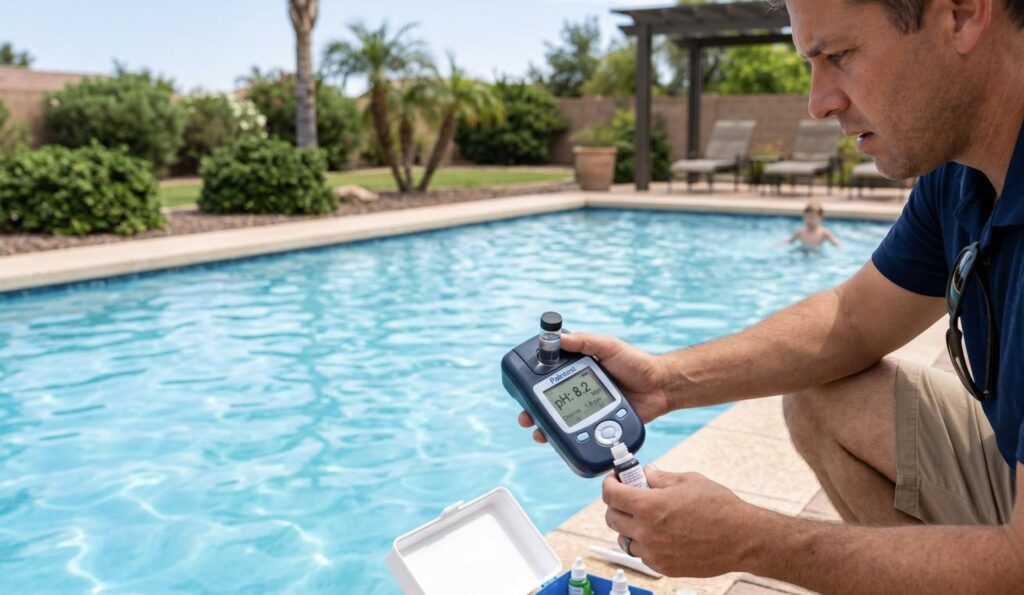
Standard poolside test kits may not provide accurate readings when used with very cold water.
The CMAHC guidance recommends using equipment designed for low-temperature testing or warming water samples appropriately before analysis.
Operators should follow the test manufacturer’s instructions to avoid inaccurate results.
Maintaining accurate testing records also helps identify changes in water quality before they become serious problems.
9. Staff Training and Emergency Preparedness
Having suitable equipment is not enough to guarantee safe operations.
Commercial cold plunge facilities also need properly trained employees who understand water treatment, equipment operation, and emergency response.
Train Employees in Key Responsibilities
Staff training should include:
- Water testing and sanitation procedures.
- Chemical handling and storage.
- Equipment inspection.
- Daily cleaning procedures.
- User safety communication.
- Emergency response.
- Safe assistance and extraction procedures.
The CMAHC guidance recommends having a qualified operator oversee the facility.
It also recommends an on-site attendant trained in CPR, first aid, and safely removing a person from the vessel during operating hours.
Establish Standard Operating Procedures
Written procedures should clearly explain how employees manage everyday operations.
These procedures should cover water quality monitoring, preventive maintenance, bather capacity, contamination incidents, and emergency situations.
Regular training and procedure reviews help ensure employees understand their responsibilities.
10. Safety Signage and User Awareness
Clear communication helps users understand potential risks before entering a cold-water venue.
The CMAHC guidance recommends displaying visible safety signage in locations where users can read it before immersion.
Important information should include:
- Risks associated with cold shock.
- Potential breathing and coordination problems.
- Recommended exposure limits.
- Medical considerations.
- Restrictions on unsafe behaviour.
- Instructions against using the facility alone.
- Guidance against use while under the influence of alcohol or impairing substances.
The document recommends signage advising users not to spend more than five minutes in a single session.
This should be understood as a guidance recommendation, not a guarantee that a five-minute exposure is safe for everyone.
Who May Be at Increased Risk?
The guidance identifies several groups requiring particular caution, including:
- People with heart conditions.
- Individuals with high blood pressure.
- People with diabetes or circulation problems.
- Individuals with respiratory conditions.
- Pregnant individuals.
- Older adults.
- Young children.
- People with compromised immune systems.
Users should consult an appropriate healthcare professional before cold-water immersion when relevant health concerns exist.
Cold plunges are not suitable for everyone, and clear safety communication is essential.
11. Understand Commercial and Regulatory Responsibilities
The CMAHC document provides recommendations for commercial cold-water facilities, but it does not independently create new legal requirements.
Actual regulatory requirements depend on the authority having jurisdiction (AHJ), applicable local codes, and the approval conditions for each facility.
Before opening a commercial cold plunge installation, business owners should:
- Review local health and safety regulations.
- Consult the relevant public health authority.
- Confirm building and equipment approvals.
- Verify circulation and treatment system specifications.
- Establish inspection and maintenance records.
- Document employee training.
- Develop appropriate emergency procedures.
The published guidance is aimed at public and commercial cold-water venues. It does not generally apply to private residential use, natural bodies of water, or certain temporary and inflatable systems unless otherwise regulated by the relevant authority.
Final Thoughts: Safe Cold Plunge Operations Require More Than Cold Water
Cold plunges and ice baths are creating new opportunities for gyms, spas, wellness centers, and commercial aquatic facilities.
However, their growing popularity also creates additional responsibilities for facility owners and operators.
Proper water disinfection, filtration, circulation, temperature monitoring, equipment selection, and employee training are essential parts of successful cold-water facility management.
The CMAHC guidance provides a practical framework that helps industry professionals understand these requirements and evaluate potential risks.
A successful commercial cold plunge facility is not simply one that keeps water cold. It is one that combines appropriate design, effective water treatment, trained employees, and consistent safety procedures.
Frequently Asked Questions (FAQs)
1. What is a commercial cold plunge?
A commercial cold plunge is a specialized tub, tank, or pool maintained below approximately 70°F (21°C) for short-term cold-water immersion in facilities such as gyms, spas, and wellness centers.
2. What is the CMAHC cold-water venue guidance?
It is a guidance document developed by the Council for the Model Aquatic Health Code to help public health agencies and industry professionals evaluate the design, construction, operation, and maintenance of commercial cold-water venues.
3. What chlorine level does the CMAHC recommend for cold plunges?
The guidance recommends maintaining free chlorine at or above 3.0 ppm, subject to manufacturer instructions and applicable regulatory requirements.
4. Is bromine suitable for commercial cold plunges?
The guidance recommends bromine levels at or above 4.0 ppm, with concentrations remaining within the applicable manufacturer limits and regulatory requirements.
5. Why is filtration important in ice baths?
Filtration and continuous circulation help maintain consistent water quality, remove suspended material, and support the effectiveness of the overall water treatment system.
6. How often should commercial cold plunge water be replaced?
Water replacement depends on system design, water volume, bather usage, and water quality. Small systems without continuous treatment may require draining, cleaning, disinfection, and refilling between users.
7. Are cold plunges safe for everyone?
No. Cold-water immersion can create risks such as cold shock, drowning, hypothermia, and cardiovascular stress. People with certain medical conditions should seek advice from an appropriate healthcare professional before using these facilities.
8. Why is staff training important for cold plunge facilities?
Trained employees help manage water testing, chemical treatment, equipment inspections, cleaning, user safety, and emergency response.
9. Does CMAHC guidance create new legal requirements?
No. The published document is non-regulatory guidance. Actual legal requirements depend on the relevant local authority and applicable regulations.
10. What should operators check before opening a commercial cold plunge?
Operators should evaluate water treatment, circulation, filtration, temperature control, equipment compatibility, facility safety, regulatory approvals, staff training, and emergency procedures.